Modular Blockchain Architecture: Why Enterprise Blockchain Is Back for Good
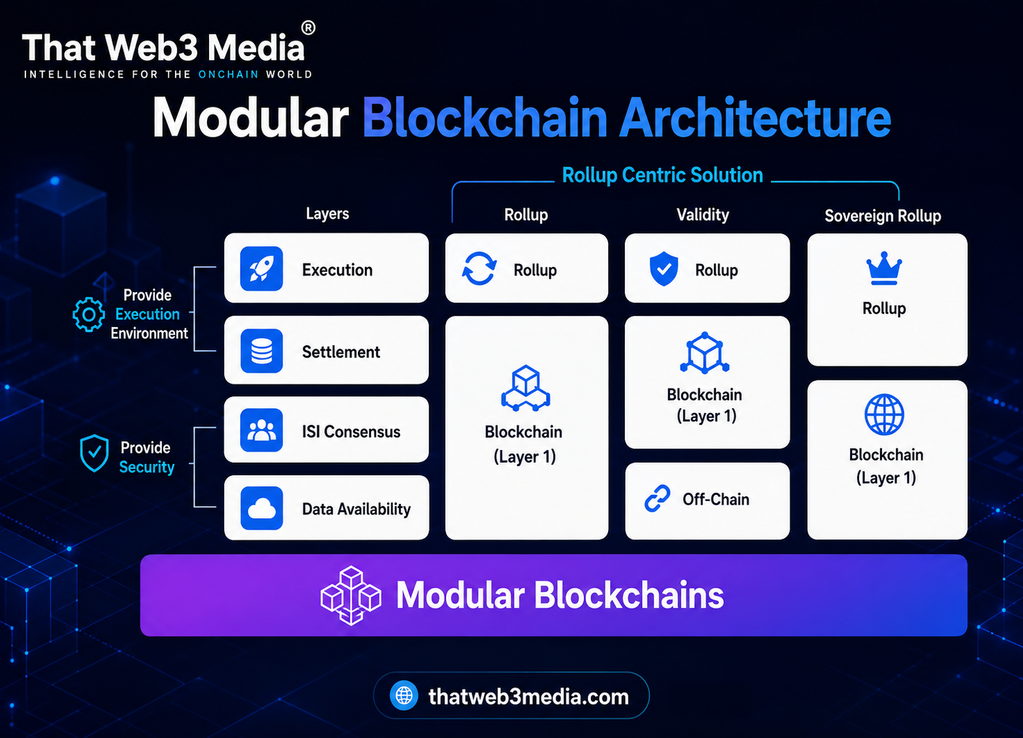
A Fortune 500 treasury team piloted blockchain in 2019. They shelved it in 2021. Then they quietly restarted the project in early 2026. Nothing about their business changed. What changed is the infrastructure underneath it. Modular blockchain architecture now lets that team enforce compliance rules at the execution layer instead of bolting them on after the fact. That single shift is doing more to revive enterprise blockchain than any new headline use case.
This article breaks down what modular blockchain architecture actually is. It explains why the approach is succeeding where monolithic chains stalled. It also covers how AI-driven compliance tooling has become the second half of the same story, backed by current data and what enterprises should weigh before committing budget.
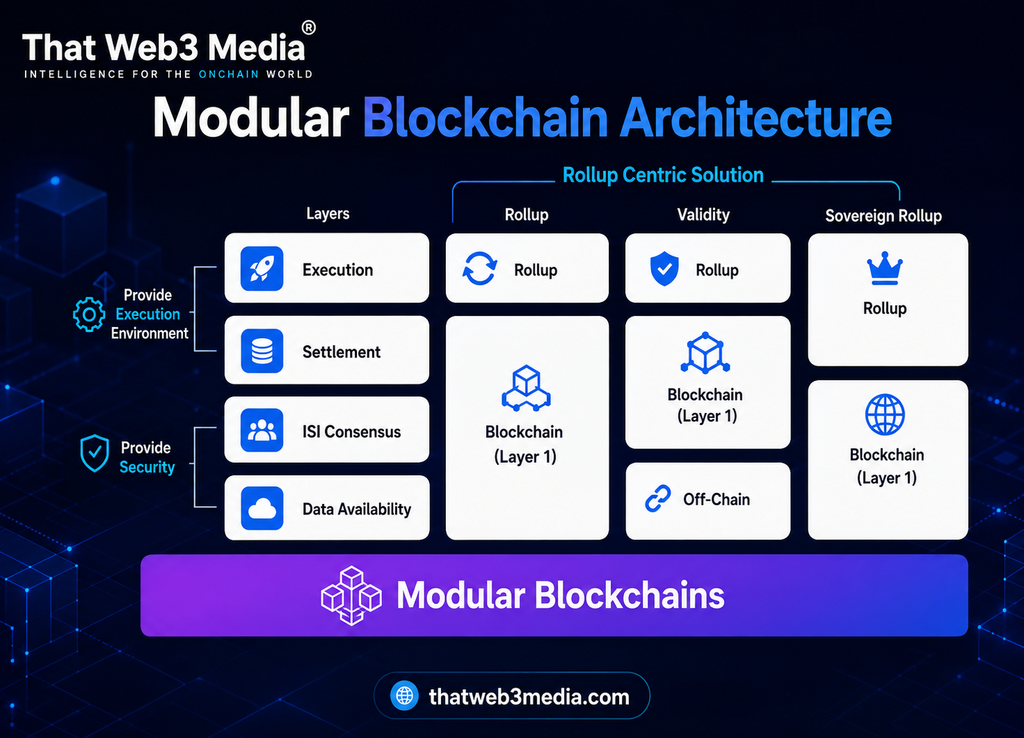
What Is Modular Blockchain Architecture
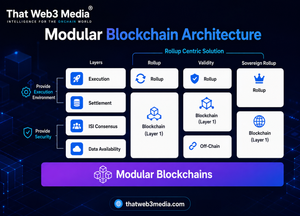
Monolithic blockchains handle execution, consensus, data availability, and settlement in one layer. That design made sense early on. But it also created a hard ceiling on throughput. Enterprises got stuck choosing between speed and decentralization.
Modular blockchain architecture splits those functions apart. Execution happens on one layer, often an application-specific rollup. Data availability and consensus happen elsewhere. A shared settlement layer anchors the whole system. It gives every participant a single, verifiable source of truth. Each layer can scale on its own instead of dragging the others down.
For enterprises, the practical benefit is control. A company can run its own execution environment. It can enforce its own permissioning and compliance rules inside that environment. It can still settle transactions on a public, auditable base layer. That combination did not exist in earlier blockchain generations. It is the reason modular architecture keeps surfacing in conversations that used to dead-end at “blockchain doesn’t scale.”
Why Enterprise Blockchain Stalled the First Time Around
The first enterprise blockchain wave ran into a familiar list of problems. Teams built pilots faster than they built a case for scaling them. Enterprise blockchain projects leaned on permissioned networks that solved data privacy but created new interoperability headaches between vendors.
Integration costs made the problem worse. Legacy ERPs and core banking platforms were never built to talk to a distributed ledger. Every connection needed custom middleware. Six-month pilots stretched into multi-year integration projects. Executives lost patience before the technology could prove its value.
Compliance added a second layer of friction. Regulated enterprises could not put sensitive transaction data on networks with unclear rules around privacy, access, and reporting. Many of the same adoption barriers still shape decision-making today. But the technology now has two credible answers it lacked five years ago: modular infrastructure and AI-assisted compliance tooling.
The Data Behind Enterprise Blockchain’s Return
Gartner projects blockchain’s business value-add will exceed $3.1 trillion by 2030. 2026 is the year that curve visibly bends upward. Institutional investment in modular blockchain ecosystems has grown roughly 30 percent year over year since 2022. Enterprise adoption of application-specific Layer 3 networks rose sharply through 2025, according to infrastructure data compiled by CoinLaw.
Tokenization tells a similar story. Boston Consulting Group and Ripple project tokenized assets could exceed $18 trillion in the coming years. That growth would come at a compound annual rate near 53 percent. It depends almost entirely on infrastructure that can enforce compliance rules at the execution layer. That is exactly what modular blockchain architecture was built to do.
Investment bank B. Riley put the shift in blunt terms. Digital assets are moving from speculation to practical infrastructure in 2026 as regulation matures and traditional institutions deploy blockchain at scale. That framing matters. Enterprises are not chasing a new asset class. They are rebuilding settlement and compliance infrastructure. Modular design gives them a way to do it without ripping out what already works.
Layer 3 networks reinforce that picture on the performance side. They can process up to 12,000 transactions per second in real-world tests, compared with 15 to 30 on Ethereum’s base layer. That gap explains why enterprises evaluating modular blockchain architecture increasingly treat throughput as a solved problem. The open question has shifted to governance, not raw capacity.
How Modular Blockchain Architecture Solves the Integration Problem
Application-specific rollups let an enterprise define custom rules. Who can transact, what data gets recorded, and how disputes settle can all be set without touching the base layer’s consensus. That isolation is the key advantage. A bank can run a permissioned execution environment for trade finance. It can still anchor final settlement to a public chain that partners and regulators can independently verify.
Interoperability improves for a subtler reason. Modular systems separate data availability from execution. Multiple rollups can share the same underlying data layer even when they enforce different rules internally. Enterprises no longer need every partner on an identical, monolithic network just to exchange verifiable data.
Cost economics reinforce the shift. Layer 3 networks now cut transaction fees by up to 70 percent compared with monolithic Layer 1 chains. They can process workloads that would have been economically unworkable on earlier architecture. When a compliance check or an audit log write costs a fraction of a cent, enterprises stop treating on-chain compliance as a cost center. They start treating it as default infrastructure.
AI Compliance: The Catalyst Nobody Priced In
Modular architecture solved the technical half of enterprise blockchain’s problem. AI compliance tooling is solving the operational half. It is arriving faster than most 2023-era roadmaps assumed.
McKinsey frames the shift as a move away from reactive, manual compliance work. Organizations are heading toward a proactive, digital-first approach built around continuous monitoring rather than periodic review. That framing lines up directly with what modular blockchain architecture enables technically. Rules get enforced automatically, in real time, at the point of execution rather than checked later by a human auditor.
The regulatory backdrop is pushing in the same direction. Baker McKenzie notes that financial institutions are being asked to embed compliance infrastructure directly into how they deploy new technology. Compliance is no longer a separate workstream. The EU AI Act classifies AI systems used for fraud detection, credit scoring, and anti-money-laundering work as high risk. Transparency, human oversight, and technical documentation are now baseline requirements, not best practices.
Put those two forces together and the appeal of modular blockchain architecture becomes obvious. It gives AI compliance systems a tamper-evident record to monitor. It also gives them an execution layer where rules can actually be enforced, not just documented after the fact.
This is a meaningful shift in how compliance teams operate. Under the old model, a human reviewer checked transactions in batches, often days after the fact. Under the new model, an AI system flags anomalies as they happen and routes them for review in real time. Modular blockchain architecture makes that real-time check possible because the compliance logic lives inside the execution layer itself, not in a separate reporting system bolted on afterward.
Where Modular Design and AI Compliance Already Run in Production
Adoption concentrates wherever manual compliance work used to cost the most.
Trade finance and cross-border settlement. Banks run permissioned rollups that enforce KYC and sanctions rules at the transaction layer. They settle to a shared base chain that counterparties and regulators can audit independently.
Tokenized securities and fixed income. Application-specific execution environments enforce transfer restrictions, accredited-investor rules, and jurisdictional limits automatically. That is the same kind of custom compliance logic stablecoin settlement rails rely on for regulated payment flows.
Supply chain provenance. Manufacturers use modular rollups to record custody and compliance events. They do this without exposing commercially sensitive data to every network participant.
Machine-to-machine transactions. As autonomous agents begin transacting on enterprise networks, modular execution layers give compliance teams a way to enforce spend limits and authorization rules. They can do this without slowing agent-speed transactions down.
Regulatory Clarity Is Removing the Last Excuse
For years, enterprises cited regulatory uncertainty as a reason to wait. That excuse is losing force in 2026. Deutsche Bank’s outlook on digital assets argues that regulatory structure now matters more to enterprise adoption than any single product feature. Structure finally gives legal and compliance teams a framework they can evaluate against.
Silicon Valley Bank reaches a similar conclusion in its 2026 outlook. It notes that enterprise finance leaders now feel comfortable moving real money onto blockchain-based rails because the regulatory environment has stopped shifting unpredictably. The EU’s MiCA framework, the GENIUS Act’s stablecoin provisions, and updated U.S. guidance on digital assets have replaced years of ambiguity with concrete rules.
That clarity feeds directly back into modular blockchain architecture. Enterprises can now design execution-layer compliance rules against a known regulatory target. They no longer have to guess at requirements that might change before a pilot even finishes.
What Enterprises Should Consider Before Adopting Modular Blockchain Architecture
A handful of practical decisions separate deployments that scale from ones that stall out again.
Execution layer ownership. Decide early whether the enterprise runs its own rollup or relies on a third-party execution environment. Running your own environment gives more control over compliance logic. It also adds operational overhead; the team must be staffed to support.
Data availability strategy. Modular systems depend on a reliable data availability layer. Enterprises should confirm uptime guarantees and cost structure before committing production transaction volume to any single provider.
Compliance-by-design, not compliance-after-the-fact. Build AI compliance monitoring into the execution layer from the start. Retrofitting compliance logic onto a live system costs far more than designing it in from day one.
Interoperability with legacy systems. Confirm that middleware exists, or can be built affordably, to connect the execution layer with core ERPs and banking platforms. This remains the single biggest driver of cost overruns in enterprise blockchain projects.
Vendor and protocol maturity. The modular stack is still consolidating. Enterprises should favor protocols with active audit histories and institutional backing over unproven frameworks chasing early-mover attention.
The Road Ahead
Enterprise blockchain is not becoming the transformation mandate that 2018-era hype once promised. Something narrower and more durable is happening instead. Modular blockchain architecture gives enterprises a way to isolate execution, enforce compliance, and settle transactions. They no longer need to rebuild an entire technology stack around one monolithic chain.
AI compliance tooling is the piece that makes this practical at scale. Manual review cycles could not keep pace with rising transaction volume. Enterprises are moving toward continuous, automated monitoring built directly into the execution layer instead.
The open question for 2027 is not whether modular architecture and AI compliance belong in enterprise infrastructure. It is which industries move from pilot to production first. It is also how quickly the protocol layer consolidates around a small number of dominant standards.
Frequently Asked Questions
What makes modular blockchain architecture different from a traditional blockchain? A traditional, monolithic blockchain handles execution, consensus, and data availability in a single layer. Modular blockchain architecture separates those functions so each layer can scale and be governed independently, while still settling to a shared base chain.
Why is AI compliance important for enterprise blockchain adoption? AI compliance tools monitor transactions continuously and enforce regulatory rules in real time. That matches the automated, execution-layer compliance that modular blockchain architecture makes possible. Manual, periodic review cannot keep pace with the volume modular systems enable.
Do enterprises need to run their own rollup to use modular blockchain architecture? No. Enterprises can use third-party execution environments. Running a dedicated rollup simply gives more direct control over custom compliance rules and data governance.
Is modular blockchain architecture only relevant to financial services? No. Financial services and tokenized securities are leading adopters today. Supply chain provenance, healthcare data governance, and machine-to-machine commerce are all adopting modular blockchain architecture for the same reason: isolating compliance logic without sacrificing shared settlement.